Precision at Scale: Why CNC Machining is the Backbone of Modern Manufacturing
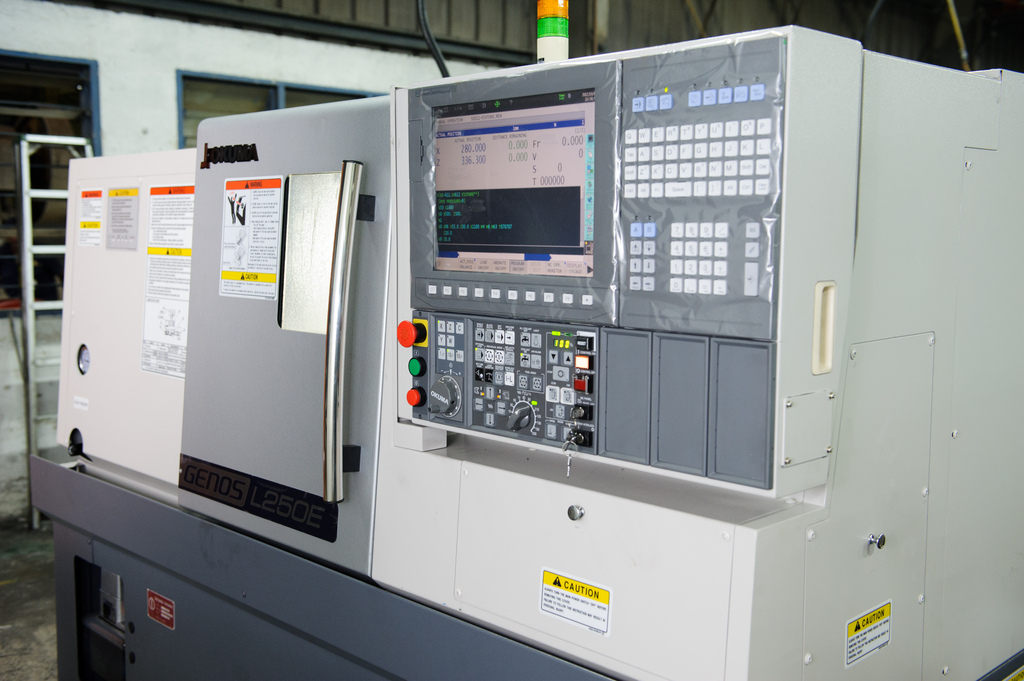
In modern manufacturing, precision and efficiency are paramount. One of the key technologies driving this is CNC Machining.
What is CNC Machining?
CNC stands for Computer Numerical Control. It is a manufacturing process where pre-programmed computer software dictates the movement of factory tools and machinery. This technology is used to control a wide range of complex machines, from grinders and lathes to mills and routers.
With CNC machining, three-dimensional cutting tasks can be accomplished with a single set of prompts. The process is a "subtractive" one, meaning it creates the final part by removing material from a solid block or piece of stock, unlike 3D printing which is "additive”.
How Does the CNC Process Work?
The CNC machining process involves a few key steps:
- Design (CAD): An engineer creates a 3D digital model of the desired part using Computer-Aided Design (CAD) software.
- Manufacturing (CAM): The CAD model is then exported to Computer-Aided Manufacturing (CAM) software. This software translates the design into machine-readable instructions, typically in a language called G-code. The user also defines parameters like tool path, spindle speed, and feed rate at this stage.
- Machining: The CNC machine reads the G-code and the computer controls the machine's motors to move the cutting tools or workpiece precisely along the defined paths, removing material until the final part is created.
The Function of CNC Machining
The primary function of CNC machining is to automate the production of high-precision, complex parts that would be difficult, slow, or impossible to create with manual machining. Its main roles include:
- Producing Complex Geometries: It can create intricate shapes and designs with a high degree of accuracy and detail.
- Ensuring Repeatability: Once a program is created, the CNC machine can produce thousands of identical parts with remarkable consistency, a critical requirement for mass production.
- High Precision and Accuracy: CNC machines can achieve very tight tolerances, often within a thousandth of an inch, crucial for industries like aerospace and medical devices where precision is non-negotiable.
- Versatility: It works with a wide variety of materials, including most metals (aluminum, steel, titanium, copper) and plastics (acrylic, polycarbonate) .
Main Types of CNC Machines
While there are many types, two of the most common are CNC Milling and CNC Turning:
CNC Milling
In CNC milling, a rotating cutting tool moves against a stationary workpiece . This process is ideal for creating flat surfaces, slots, and intricate 3D shapes. Milling machines can be categorized by their axes of movement (e.g., 3-axis, 5-axis), with more axes allowing for more complex designs.
CNC Turning
CNC turning, performed on a CNC lathe, reverses this motion: the workpiece rotates while a stationary cutting tool is applied to it. This method is best suited for creating parts with cylindrical or conical symmetry, such as shafts, screws, and rods.
Advantages of CNC Machining
- Speed and Efficiency: Automated processes significantly reduce production time, and machines can often run 24/7 .
- Cost-Effectiveness: While setup can be complex, the automation and speed make it very cost-effective for high-volume production of parts with tight tolerances.
- Material Flexibility: As mentioned, it can work with a vast array of materials.
Disadvantages and Limitations
- Not Ideal for All Shapes: Certain internal shapes or undercuts can be difficult or impossible to create.
- Size Limitations: The size of the part is generally limited by the size of the machine itself.
- Material Waste: Being a subtractive process, it can create more waste material than processes like casting.
- Tool Access: The shape of a part can be restricted by the tool's ability to access certain areas (e.g., inside corners will have a radius equal to the cutting tool) .
Applications of CNC Machining
CNC machining is essential across a vast range of industries, including:
- Aerospace: Manufacturing critical components like engine parts and turbine blades.
- Automotive: Creating engine blocks, transmission components, and custom parts.
- Medical: Producing precise surgical instruments, prosthetics, and implants.
- Consumer Electronics: Manufacturing enclosures and brackets for electronic devices.
Conclusion
CNC machining is a cornerstone of modern manufacturing. Its ability to produce complex, precise, and repeatable parts from a wide range of materials makes it an indispensable function for countless industries. While it has limitations regarding geometry and tooling, its advantages in speed, precision, and versatility ensure its continued importance in creating the world around us.